
Menorcan Horse
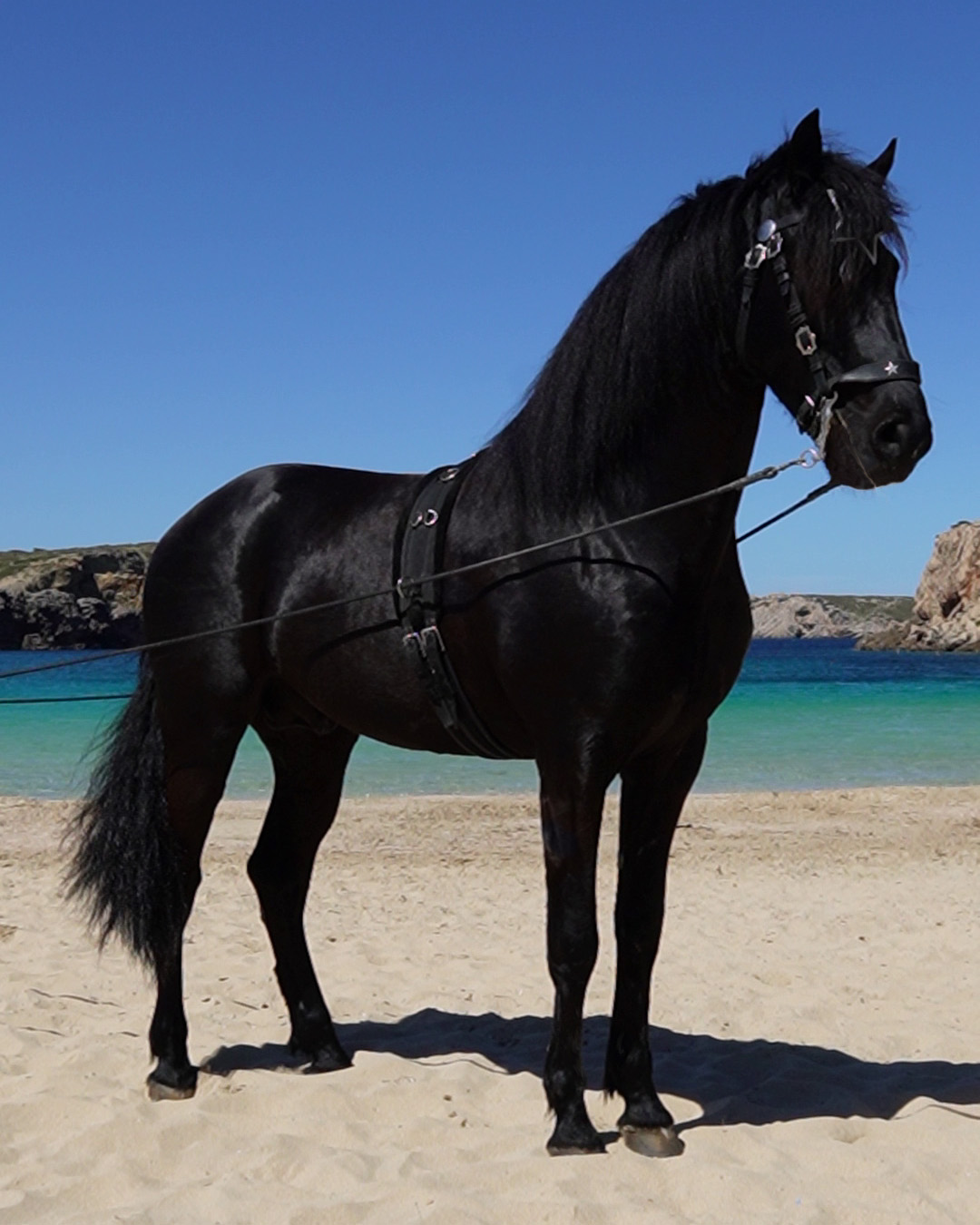
The real kings of the festivities in Menorca are purebred.
Menorca has the horse as its king and tradition as its custom. The horse is the main protagonist of the festivities in Menorca, which goes out decorated to the street, where people cheer it on. The horses have been taught to perform Menorcan Dressage exercises, which allow them to demonstrate their skills without difficulties during the Jaleo, as it is known in Menorca.
Colección: Fiestas Menorca
Menorca and horses
Poriol, Jan, Xatu, Nin, Revull, Xifoner, Cel, Urko, Coet and Xubec are the names of some of the Menorcan horses. The love, appreciation and respect that Menorca has for them, makes them the undisputed protagonists of the traditional festivals. So much so that without horses there would be no Menorca festivals that are known today.
Menorca is a land of horses, just walk along the Camí de Cavalls or along the secondary roads to see specimens running through the farms. It is very common that, with the arrival of good weather, their caretakers take them for a walk at sunset through the streets and paths of the villages, thus being easily visible also on the secondary roads.
The owners of horses and mares share their lives with this wonderful and noble animal. They dedicate time daily to their care, so that everything is in order and so that the horse is well. They also seek to spend time with him to strengthen their bond, and ensure that the horse is happy, healthy and affable.
The responsibility and dedication that is required to take care of a horse is lived with a lot of passion, fervor and love, as the well-being and good care of the horse is sought as if it were another member of the family.
The Purebred Menorcan Horse
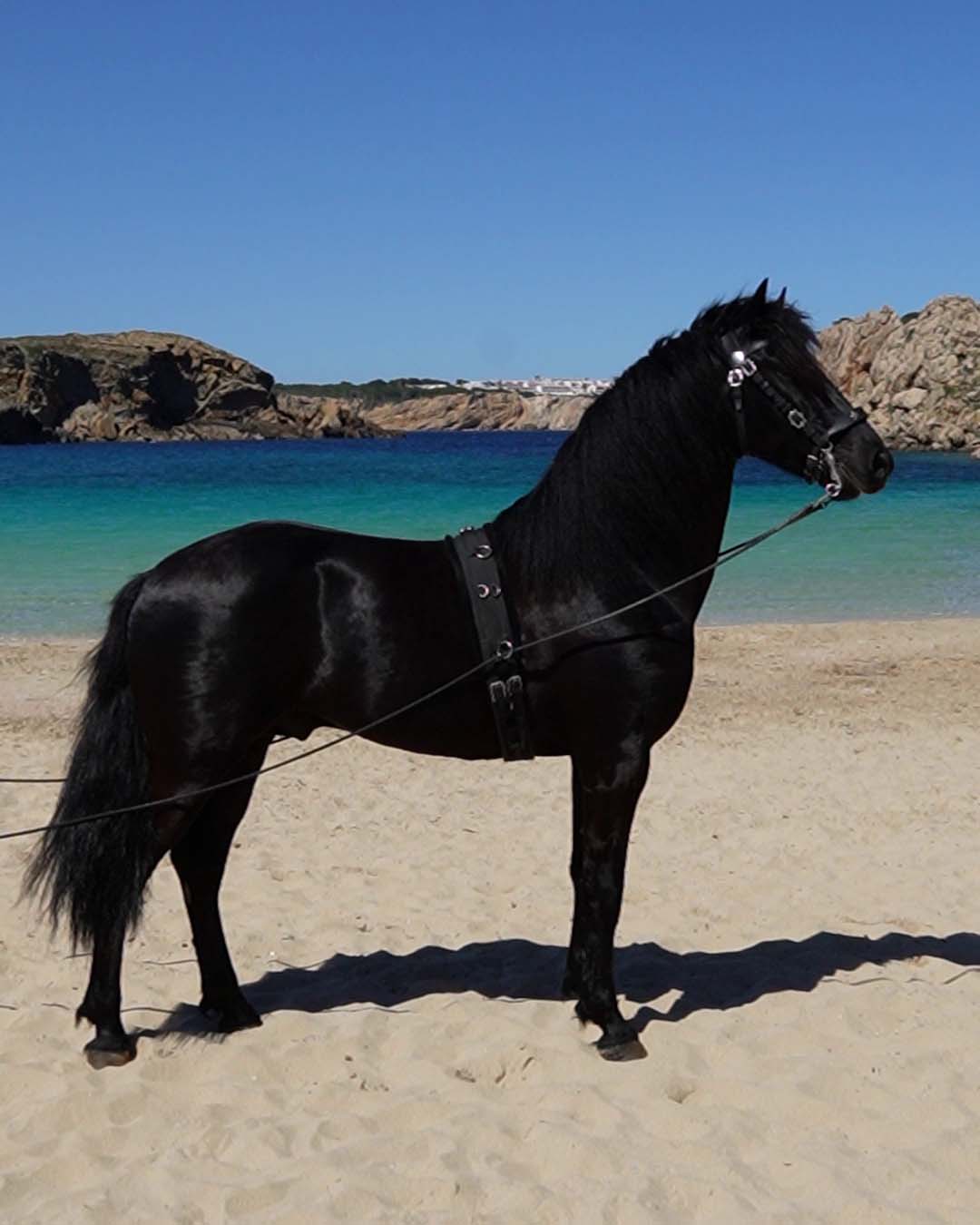
It has been an official breed since January 1989. With a slender and majestic silhouette, they are black caped. Sometimes they have white spots, on the face and extremities, of reduced extension. He is a noble warm-blooded, rustic and hardy horse.
Colección: Fiestas Menorca
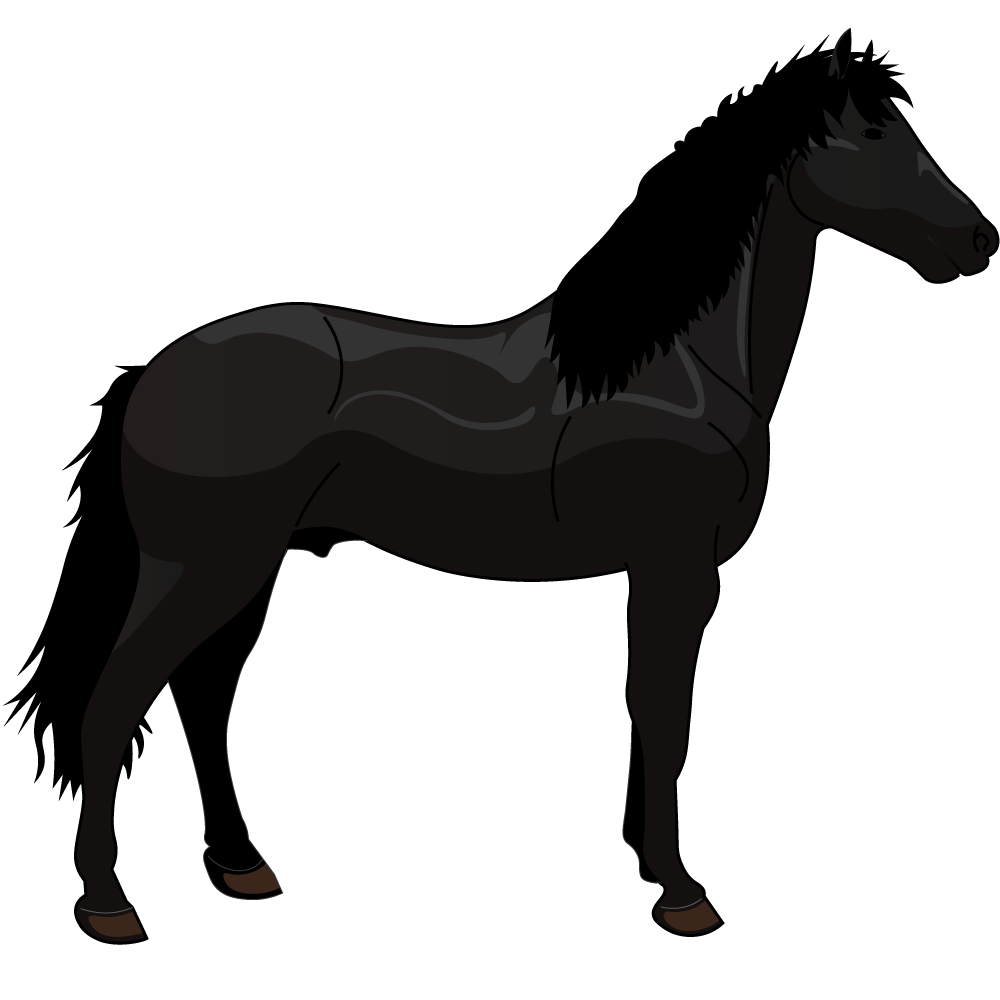
- Shiny black
- Small ears
- Round eyes
- Straight profile
- Thin and elongated head
- Oblique and muscular shoulders
- Round and muscular neck
- Slightly prominent withers
- Thin and long limbs
- Possibility of discreet white markings
- Slightly arched ribs
- Fairly long and muscular back
- Muscular kidneys
- Powerful and slightly sloping croup
- Low-set tail
- Long and abundant mane
- Hard and small hooves
Origin of the Menorcan horse
The Menorcan horse is characterized by its black color, thin and long limbs, rounded eyes, lively gaze, noble character, energetic and strong appearance, and elegant style. Among the Spanish horses, the intense black color and its refined and robust silhouette stand out for their sobriety, resistance and elegance.
The origin of its breed does not agree with experts, some indicate that it is related to the Berber and others to Central European horses. Although they do agree that being on an island they did not have influences from other breeds in their crosses to achieve exclusive purity. In the same way as the black sargantana that inhabits the illa de l’Aire.
Strength, character and sensitivity
If you have ever wondered “How much horsepower (of power) can a horse generate?” you will surely be surprised to know that it does not generate one, but can generate between 12 and 15 horsepower.
In Menorca, it is common for you to see them walking near llocs, behind the Menorcan walls. If you stop to observe them, you will always find them calm, showing their natural, elegant and obedient character to their trainers and owners. They highlight the nobility in their look and behavior compared to other horse breeds.
Not only are they power and character, they are also sentient and sensitive animals, they are capable of listening to your heartbeat up to almost a meter and a half away, and between them they synchronize hearts when they are in a herd.
As you will understand, they have a special sensitivity that is not observable with the naked eye. Perhaps one of the most visible is that they can independently move body muscles at will, because they have a high degree of sensitivity in the skin, evidently there are areas with a higher degree of sensitivity than others. An example of this is that small “spasm” that can be observed on the horse’s skin, which they produce thanks to the precise control they have over their muscles.
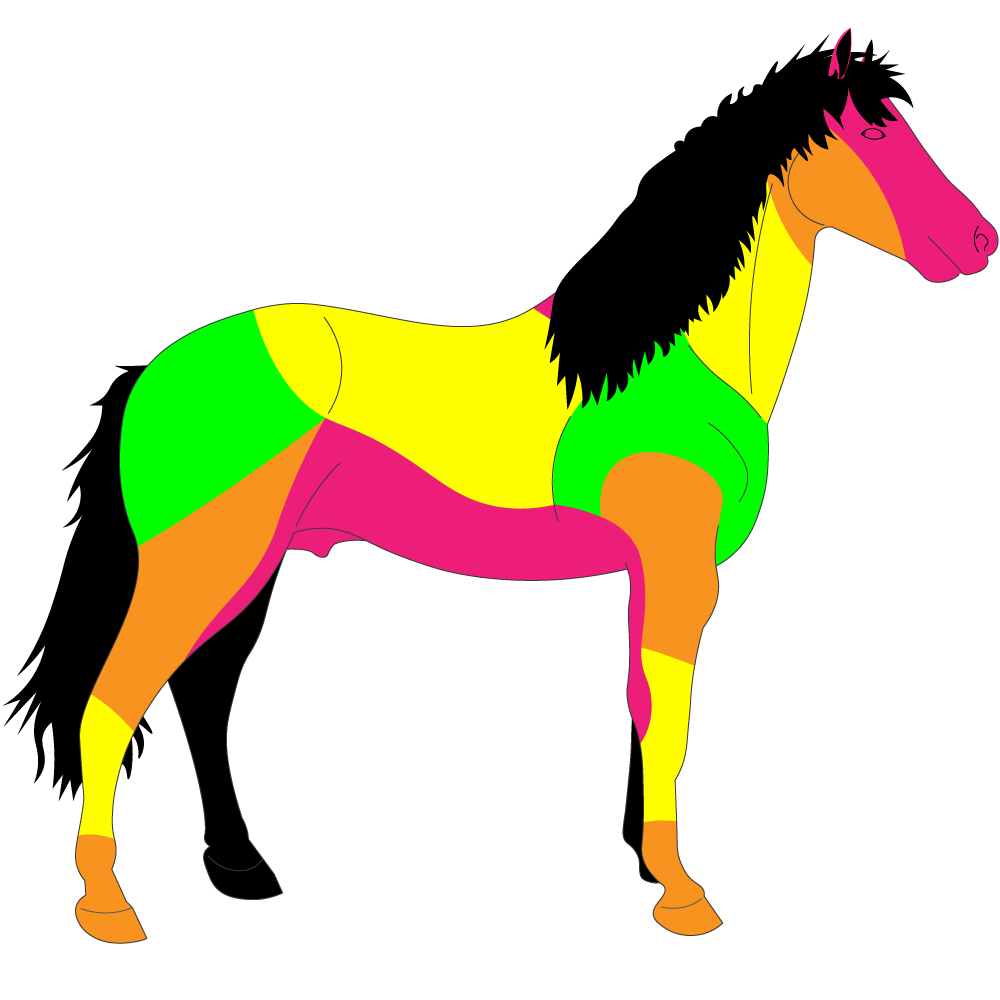
- Very sensitive
- High sensitivity
- Elevated sensitivity
- Normal sensitivity
The Menorcan horse during the festivities
All popular festivals in Menorca have a common protagonist: the Menorcan horse, since without this noble animal the festival would not be what it is.
The Menorcan horses, in addition to “dancing” to the rhythm of the traditional “jaleo” in the Menorcan festivals, performing the well-known “bot”, are also very suitable and effective in dressage, high school dressage, shows and carriage. There are several Menorcan equestrian centers that compete in international competitions.
In Menorca’s festivals, the style of horseback riding from medieval times is maintained in terms of the way of taking the reins with the left hand. The main reason for maintaining this style of dressage is equestrian games, this style is known as the muntada a la geneta, although the tamers in the practice of equestrian art have allowed to go from a natural to an academic one.
Data tables of the Cavall Menorca
General Information
| Breed Name | Language |
|---|---|
| MENORCAN | English |
| Purebred Menorcan | English |
| Raça Menorca | Catalan |
| Official breed classification |
|---|
| Native Breed in Danger of Extinction |
| Origin | Data |
|---|---|
| Description | It comes from the southern variant of the primitive horses of the Iberian Peninsula. |
| Year | 1989 |
| Location | Island of Menorca |
| Country | Spain |
| Geographical distribution |
|---|
| Mainly located in Menorca, although more than 10 years ago it began its expansion throughout the peninsular territory and countries in our economic environment. |
Morphology
| Morphology | Data |
|---|---|
| Description | Eumetric, with a subconvex-straight profile, medium-linear, with a slender figure and far from the ground. |
| Layers | Black, all its varieties being admitted, any other layer being excluded. |
| Color | Monochrome. White spots on the head and limbs are allowed as long as they are small in extent. |
| Withers ♂ Height | 161 cm * |
| Withers ♀ Height | 157 cm * |
Productive uses
| Uses | Data |
|---|---|
| Main | Leisure |
| Others | Sport, Other |
| Uses | A breed mainly bred for use in the major festivals of the different towns of the island of Menorca, of which it is the main protagonist. Its use in equestrian shows and exhibitions is also noteworthy for the quality of its air and the development of specific movements. In recent years, it has begun to be used in sports events, for the disciplines of Dressage and Menorcan Dressage, even standing out at a national level. |
| Environmental Importance |
|---|
| The mares and foals of this breed are kept in a semi-extensive system, taking advantage of the resources available in the environment. Therefore, they contribute to the maintenance and cleaning of the ecosystem. |
| Sociocultural Importance |
|---|
| This town is totally linked to the development of the traditional popular festivals of the villages of Menorca, where it is the undisputed protagonist through the traditional “Jaleo”. |
| Systems | Data |
|---|---|
| Exploitation | The exploitation system is mixed of stabling and grazing, generally in smallholdings of one or two mares. Housing is more or less continuous for males, while females are located in stone enclosures where they remain most of the time for a year. |
| Adaptability | Very adapted to the environment in which it develops, both in specific environments and in marginal environments. |
| Qualities | They are horses with easy and comfortable mounts, very adapted to rough roads, qualities that come from the use given to them in the past traveling through plots and fenced spaces. |
Reproduction
| Productive | Data |
|---|---|
| Conditions | They feed in grazing for the use of natural resources, with pregnant or lactating females being supplemented, if pasture is scarce. |
| AI used | Yes |
| Comments | The use of assisted reproductive techniques (artificial insemination and embryo transplantation) is only authorised for animals that have obtained a genetic category within the official Breed Conservation and Improvement Programme. |
| Reproduction | Units |
|---|---|
| Number of births per year | 1 |
| Prolificacy | 1 |